
'And it's a great place to have employees who help IBM on a global footprint.'
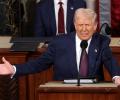
Experts suggest that a significant setback for US President Donald Trump in the midterm elections could compel him to pursue a swift trade agreement with India, as he seeks a quick foreign policy win amidst challenges with Russia, China, and Iran.

India has banned the export of lithium-ion battery black mass with immediate effect to ensure domestic availability of critical minerals and strengthen its battery recycling industry. This move aims to address the underutilisation of domestic recycling capacity due to inadequate feedstock and reduce reliance on imports for essential minerals like lithium, cobalt, nickel, and manganese.

India's Production-Linked Incentive (PLI) schemes have achieved only 28% of their targeted employment generation by FY26, despite mobilising 76% of the envisaged investment, according to a NITI Aayog assessment. The report highlights an uneven translation of manufacturing growth into job creation and calls for refining the schemes' design, shifting towards demand-side support and sector-specific interventions.

Haryana Chief Minister Nayab Singh Saini criticises the AAP-led Punjab government for political instability and lack of industrial development, while promoting Haryana's investor-friendly policies and industrial growth initiatives.

'Pranab-ji, had developed serious differences with P Chidambaram, and on one occasion, in 2010, I think, after expressing his frustration, he shocked me with the suggestion that perhaps it was time for a change at the top, which I understood as a hint of his long-held desire to become prime minister.'

Chandra Shekhar Aazad, president of Aazad Samaj Party (Kanshi Ram), claims the SP-Congress alliance is not serious about defeating the BJP in the upcoming Uttar Pradesh Assembly polls. He stated that doors are open for them to join the 'Samajik Parivartan Morcha' formed with AIMIM. Aazad also dismissed "B-team" allegations and outlined his party's vision for UP, including education, employment, and healthcare reforms.

Experts at a national symposium in Shillong discussed the role of Artificial Intelligence in tourism, emphasising that AI should support human judgment, local knowledge, and cultural values rather than replace them. Discussions highlighted the need for robust policies to address ethical concerns, safeguard livelihoods, and preserve cultural heritage while leveraging AI for innovation and sustainability in the tourism sector, particularly in Meghalaya.

NITI Aayog has called for a fundamental overhaul of urban governance in India, advocating for empowered city governments, directly elected mayors with five-year terms, and greater financial autonomy for urban local bodies to manage the country's rapidly growing urban population.

US Secretary of State Marco Rubio's visit to India this week underscores the complex dynamics of global energy policy, as Washington re-evaluates sanctions on Russian oil buyers amidst India's continued reliance on Russian crude.
Chief Economic Adviser V Anantha Nageswaran has urged the industry to invest in skilling, capability development, and innovation to counter the challenges posed by artificial intelligence, particularly for Global Capability Centres (GCCs). He noted that while the government has supported GCCs through Budget measures like simplifying transfer pricing and promoting expansion into tier-II/III cities, industry must move beyond low-cost execution to thrive in an an AI-driven landscape. Nageswaran emphasised that AI displaces routine tasks, necessitating a focus on higher-value work and continuous skill enhancement to maintain India's competitive edge.
A national study of top 75 Indian B-schools reveals a significant competency gap in AI skills among management graduates, with industry expectations far exceeding current MBA capabilities. A new framework by AIMS, EPSI, and IMC highlights the urgent need for management education to adapt to an AI-led workplace, emphasizing behavioural competencies alongside data fluency.

Former IAS officer Divya Mittal has launched her new political party, Jan Neeti Bharat, with the aim of contesting the 2027 Uttar Pradesh assembly elections and redefining governance by making people central to policymaking and ensuring government accountability.

J R D Tata, chairman of the Tata group from 1938 to 1991, said that whenever he had to make a difficult decision, he would ask himself, what will be good for India, and what will be good for the Tatas. If he had a doubt, he would decide in favour of India. In the long run, it would turn out well for the Tatas too, he said, points out Arun Maira.

Civil Aviation Minister K Rammohan Naidu announced India's ambition to produce its first indigenous civilian aircraft within two years through a joint venture. He highlighted the rapid growth of the country's aviation sector, with significant aircraft orders, planned new airports, and potential for manufacturing jet engines and Sustainable Aviation Fuel, underscoring India's increasing role in global aviation.

A rocket designed and developed by ISRO is being transferred to industry for production.
Nine ISRO associations want to know whether this is simply an effort to expand India's industrial capacity or part of a larger policy under which ISRO itself will eventually withdraw from rocket manufacturing.

The RSS-affiliated Bharatiya Kisan Sangh (BKS) is set to host its inaugural women's conclave in New Delhi, aiming to advocate for increased representation of women farmers in agricultural policymaking. The event will bring together 7,000 women farmers to discuss their significant contributions to farming, livestock, and fisheries, and to push for policy changes, including a shift from MSP to MRP for produce.

Marco Rubio will visit Mumbai and Jamnagar to discuss energy cooperation as S Jaishankar says India-US trade talks are nearing a landing point, with a few issues unresolved.

'I don't think the government will sacrifice such a fine institution for monetary gains.'

There is no answer to the question of how IN-SPACe invited EOIs for ISRO's mature rockets and whether it was based on any government policy decision.

'Improved law and order and transparent governance have helped change UP's investment image.'

'An instruction came from somebody in Delhi saying, "don't go with the launch".'

Nine employee associations at ISRO have written to Chairperson V Narayanan, seeking official clarification on the proposed transfer of manufacturing and operational functions to private entities. They raised concerns about ISRO's future role, employee consequences, and recruitment, following comments by IN-SPACe chairperson Pawan Goenka regarding ISRO's eventual exit from launch vehicle manufacturing.

The larger question raised by the associations is simple: If ISRO is no longer to manufacture launch vehicles, what will happen to the institution's accumulated capabilities and the people who built them?

A member of the National Traders' Welfare Board (NTWB) has urged the central government to withdraw its decision to impose a 0.4 per cent Merchant Discount Rate (MDR) on UPI transactions exceeding Rs 2,000, effective from October 15. He warned that the new charge, which will be borne by merchants, could negatively impact business growth and lead to higher prices, contradicting the government's 'ease of doing business' policy.

The Congress party has strongly refuted government claims that its MPs on the Parliament Standing Committee on Finance supported a fee on high-value UPI payments. Congress leaders, including Gaurav Gogoi and Manish Tewari, stated that the "UPI tax" proposal was not specifically discussed by the committee, accusing the Modi government of diverting attention from public backlash and appeasing US companies. The government, however, cited the committee's report which pressed for a tiered Merchant Discount Rate (MDR) framework.
China has called for stronger global governance of artificial intelligence, advocating for international cooperation to develop the technology for humanity's benefit while preventing it from getting out of control. This comes amidst warnings from leading AI researchers in the US about potential existential risks, with China emphasizing both rapid development and robust safeguards, including its new AI Safety Governance Framework 3.0. The issue is expected to be a key topic in upcoming US-China talks.

The Indian government has challenged Congress leader Rahul Gandhi's criticism of levying fees on UPI payments above Rs 2,000 to merchants. The government highlighted that a parliamentary standing committee, which included Congress MPs, had previously backed a tiered Merchant Discount Rate (MDR) framework for UPI. This move aims to ensure the financial sustainability of the UPI ecosystem and reduce its dependence on government subsidies, a concern raised by the committee due to the significant funding gap between allocations and operational costs.

A government bill proposing to widen the remit of the Indian Statistical Institute (ISI) is facing scrutiny from Members of Parliament. Concerns have been raised that the Indian Statistical Institute Bill, 2026, could reduce the premier institute's autonomy. The bill, currently under examination by a Parliamentary Standing Committee on Finance, aims to incorporate ISI as a 'body corporate' to strengthen governance and promote academic excellence, but critics fear increased government control.
Uttar Pradesh Governor Anandiben Patel addressed AI Manthan 2.0, advocating for the comprehensive integration of Artificial Intelligence across all university subjects rather than as a standalone course. She urged universities to develop clear, time-bound AI roadmaps covering education, research, healthcare, and agriculture, emphasising indigenous AI development, employment creation, and the importance of "Safe and Trusted AI." The event also saw the formation of an AI Policy Advisory Group and an AI Implementation Group to drive these initiatives.

RBI Deputy Governor Rohit Jain highlighted that banks are well-positioned to deploy $133 billion mobilised through FCNR(B) deposits, especially with strong credit demand ahead of the festival season, while also stressing the importance of robust technology governance and cyber defences in the financial sector.

National Anti-Doping Agency (NADA) Director-General Anant Kumar highlighted the need for a collective effort from all stakeholders in the Indian sports ecosystem to reduce doping incidents. He made these remarks during a National Roundtable on Doping Prevention in Sports, which discussed various factors contributing to doping and strategies for prevention.

India's move to privatise PSLV rocket production through IN-SPACe has triggered debate over national security, ageing technology and the agency's role.
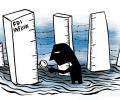
India has attracted foreign direct investment (FDI) worth approximately 4,896 crore across 29 projects since May, following the government's relaxation of norms under Press Note 2 of 2026. The revised rules permit investment without government approval from entities with up to 10 per cent non-controlling ownership by land-bordering countries.

India has removed a key regulatory hurdle, allowing exporters to receive payments in Indian currency while retaining incentives under the country's foreign trade policy, a move aimed at promoting wider use of the rupee in international trade.

'Regulations give a particular minimum amount of shares to be given in the OFS or IPO -- without which one cannot do the IPO.' 'We got that number on the day of filing of updated DRHP -- sufficient for us to go live with the IPO.'

Digital money is gradually starting to behave like software. It's no longer inert -- sitting passively in accounts. In the not-so-distant future, your money could become 'smart' and 'active,' understanding your preferences, paying your bills automatically, optimising your returns, and managing your risks -- all without you having to manage the details.

The Indian government has permitted Foreign Direct Investment (FDI) in an inventory-based e-commerce model exclusively for the export of domestically manufactured or produced goods, aiming to boost outbound shipments without affecting small local retailers.

For India, the goal is not simply to host another grand diplomatic gathering. It is to prove that a diverse coalition of emerging powers can still deliver.

'It is not because of the war in West Asia, which began on February 28.' 'Petroleum product prices are already going through the roof. They are bound to have a serious inflationary impact.' 'A country's leadership is tested in trying times. It is here that the current leadership is failing.'
